
A magnetic mount antenna is an external antenna with a magnetic base that can be attached to a metal surface. It is widely used in vehicles, industrial equipment, wireless gateways, GPS trackers, remote monitoring systems, and temporary RF testing applications.
Because it is easy to install and remove, a magnetic mount antenna is a practical choice when the device needs a flexible external antenna without drilling holes or changing the product housing.
However, choosing a magnetic mount antenna requires more than selecting a magnetic base. Frequency band, gain, cable length, connector type, mounting surface, waterproof level, and installation environment all affect antenna performance.
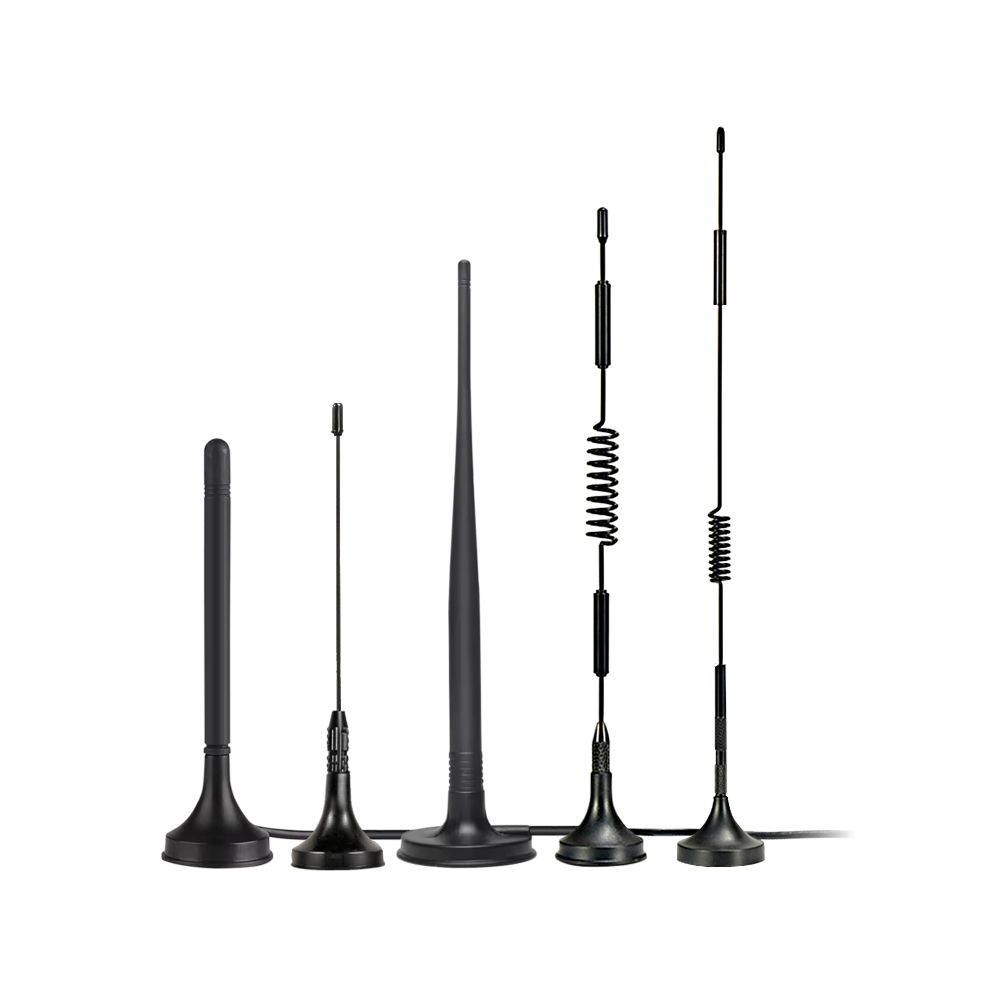
What Is a Magnetic Mount Antenna?
A magnetic mount antenna, also called a magnetic base antenna, uses a magnet at the bottom of the antenna base to attach to metal surfaces such as vehicle roofs, metal cabinets, equipment enclosures, or test platforms.
The antenna usually includes:
- Antenna element
- Magnetic base
- Coaxial cable
- RF connector
- Protective housing or radome
Magnetic mount antennas are commonly used for LTE, 4G, GNSS, WiFi, LoRa, 433MHz, 868MHz, 915MHz, and other wireless communication applications.
1. Confirm the Frequency Band
The first step in choosing a magnetic mount antenna is confirming the frequency band required by the wireless device.
Common magnetic mount antenna frequency bands include:
- 433MHz for remote control and industrial wireless devices
- 868MHz / 915MHz for LoRa and IoT systems
- GNSS / GPS bands for positioning and tracking
- 2.4GHz / 5GHz for WiFi and wireless data communication
- LTE / 4G / 5G bands for cellular communication modules
If the antenna does not match the required frequency band, wireless performance may become weak or unstable. For devices that use multiple wireless systems, such as LTE + GNSS, a combination antenna or multiple antennas may be needed.
2. Choose the Right Antenna Gain
Antenna gain affects how the antenna distributes RF energy. Many magnetic mount antennas are omnidirectional, providing coverage around the antenna in a wide horizontal area.
The right gain depends on the application. A low or moderate gain antenna may be suitable for vehicles and moving devices because the signal direction changes during use. A higher gain antenna may be useful for fixed installations where the target coverage area is mostly horizontal.
Higher gain is not always better. If the antenna is used on a moving vehicle or in a complex environment, too much focused coverage may not provide the most stable performance.
3. Check the Cable Length
Cable length is an important factor in magnetic mount antenna selection. A longer cable provides more installation flexibility, but it may also increase signal loss.
When choosing cable length, consider:
- Distance between the antenna and the device
- Cable routing path
- Signal loss at the operating frequency
- Mechanical protection
- Need for waterproof or outdoor routing
- Installation convenience
For high-frequency applications such as LTE, WiFi, or GNSS, cable loss should be carefully evaluated. If the cable is too long or low quality, antenna performance may be reduced.
4. Select the Correct Connector
The antenna connector must match the RF interface of the device. Common magnetic mount antenna connectors include:
- SMA
- RP-SMA
- FAKRA
- MCX
- MMCX
- TNC
- N-type
- IPEX / U.FL through adapter cable
For vehicle and tracking applications, SMA and FAKRA connectors are common. For IoT gateways and industrial devices, SMA or N-type connectors may be used.
Connector type, gender, and pin configuration should always be checked before purchase or production.
5. Evaluate the Mounting Surface
A magnetic mount antenna is designed to attach to a metal surface. The mounting surface can affect mechanical stability and RF performance.
A large metal surface may help the antenna work better, especially for some monopole-style antenna designs that use the metal surface as part of the ground plane.
Before selecting the antenna, consider:
- Is there a suitable metal surface?
- Is the surface flat or curved?
- Is the magnet strong enough for vibration or movement?
- Will the antenna be used on a vehicle roof, machine cabinet, or indoor metal panel?
- Is the installation temporary or permanent?
If the device does not have a metal mounting surface, another antenna type may be more suitable.
6. Consider Waterproof and Outdoor Requirements
Many magnetic mount antennas are used outdoors or on vehicles. In these cases, environmental durability matters.
Important factors include:
- Waterproof level
- UV resistance
- Temperature range
- Cable jacket material
- Vibration resistance
- Magnet strength
- Corrosion resistance
For long-term outdoor use, a waterproof magnetic mount antenna or another outdoor antenna type should be selected.
7. Standard Magnetic Mount Antenna or Custom Design?
Standard magnetic mount antennas can meet many general applications. However, custom design may be required when the product needs special frequency bands, cable length, connector type, base size, waterproof level, or mechanical structure.
A custom magnetic mount antenna may be needed when:
- The device uses a special frequency band
- A specific cable length is required
- The product needs a special connector
- The antenna must support LTE + GNSS or other combined functions
- The antenna will be used in harsh outdoor or vehicle environments
- Standard antennas cannot meet signal range or installation requirements
A custom antenna solution can help balance RF performance, mechanical design, cable routing, and production reliability.
FAQ
What is a magnetic mount antenna?
A magnetic mount antenna is an external antenna with a magnetic base that attaches to metal surfaces such as vehicle roofs or metal equipment enclosures.
Does a magnetic mount antenna need a metal surface?
In most cases, yes. A metal surface helps with mounting and may also improve RF performance for some antenna designs.
Can a magnetic mount antenna be used outdoors?
Yes, but the antenna should have suitable waterproof, UV-resistant, and weather-resistant design for outdoor use.
How do I choose the cable length?
Choose a cable length that reaches the device comfortably while keeping signal loss as low as possible.
Conclusion
Choosing a magnetic mount antenna requires careful evaluation of frequency band, gain, cable length, connector type, mounting surface, waterproof requirements, and installation environment.
If a standard magnetic mount antenna cannot meet your requirements for frequency, cable, connector, base structure, waterproof level, or wireless performance, our RF engineering team can help develop a custom antenna solution from design to production.