
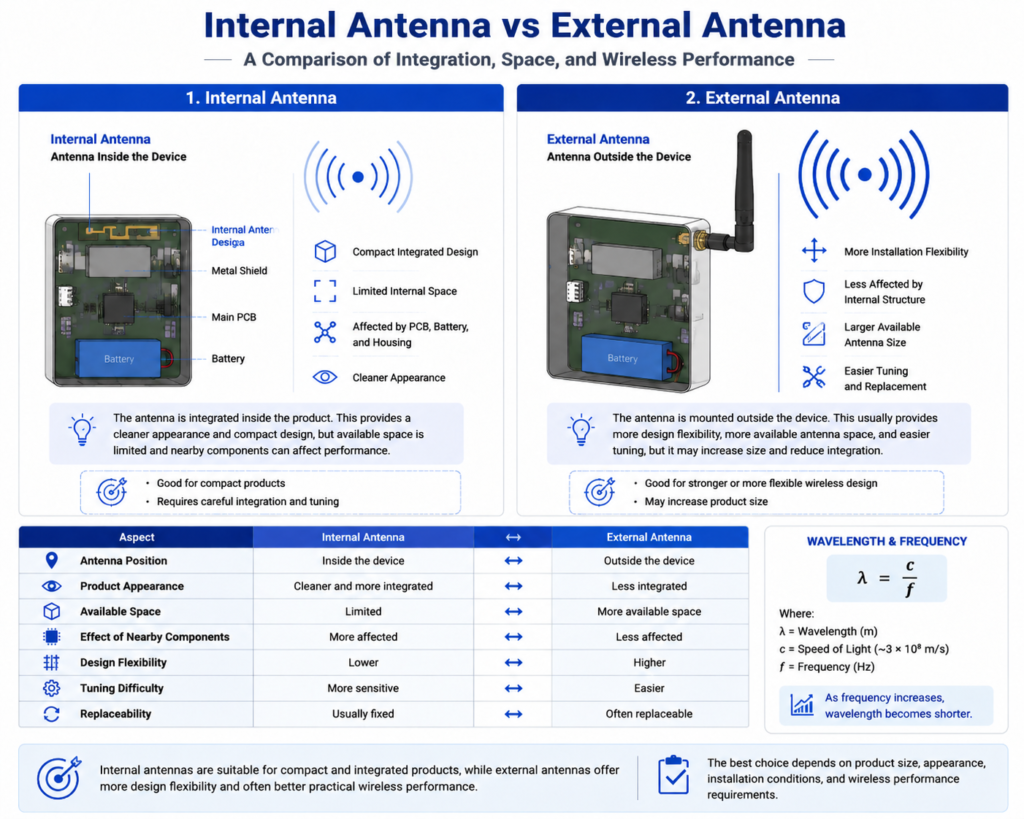
Internal antenna vs external antenna is a common question in wireless device design. Both options can work well, but the better choice depends on product size, appearance, frequency band, signal range, installation environment, and performance requirements.
An internal antenna is installed inside the device housing. An external antenna is mounted outside the device, usually through a connector, cable, or fixed mechanical structure.
There is no single best choice for every product. The right antenna selection depends on how the device will be used and what wireless performance it needs to achieve.
What Is an Internal Antenna?
An internal antenna, also called an embedded antenna, is placed inside the product. Common internal antenna types include PCB antennas, FPC antennas, spring antennas, ceramic antennas, and internal directional antennas.
Internal antennas are widely used in compact wireless devices, IoT sensors, trackers, smart meters, handheld devices, remote controls, routers, and consumer electronics.
The main advantage of an internal antenna is that it keeps the product clean, compact, and protected. There is no exposed antenna outside the housing, which can improve appearance and reduce the risk of physical damage.
Advantages of Internal Antennas
Internal antennas are often chosen when product appearance and compact structure are important.
Common advantages include:
- Clean product appearance
- Better protection from external damage
- Suitable for compact wireless devices
- No external antenna connector required in some designs
- Good option for mass-produced IoT products
- More integrated mechanical design
However, internal antenna design can be more sensitive to the device structure. The PCB layout, battery, display, metal parts, housing material, and antenna clearance can all affect antenna performance.
What Is an External Antenna?
An external antenna is mounted outside the device. Common external antenna types include rubber duck antennas, magnetic mount antennas, fiberglass antennas, ceiling mount antennas, sector antennas, and parabolic antennas.
External antennas are often used when better signal range, flexible installation, outdoor durability, or higher gain is required.
Because the antenna is outside the device housing, it is usually less affected by internal components. This can make external antennas easier to tune and more flexible in many applications.
Advantages of External Antennas
External antennas are often selected for products that require stronger or more flexible wireless performance.
Common advantages include:
- Better installation flexibility
- Easier antenna replacement or upgrade
- More options for gain and radiation pattern
- Suitable for outdoor or industrial environments
- Less affected by internal device components
- Better choice for long-range communication in many cases
For example, a rubber duck antenna may be suitable for general wireless communication. A magnetic mount antenna may be used on vehicles or metal surfaces. A fiberglass antenna may be used for outdoor gateways or base stations.
Internal Antenna vs External Antenna: Key Differences
The main difference is the balance between integration and performance flexibility.
An internal antenna is better when the product needs a compact and clean appearance. An external antenna is often better when signal range, installation flexibility, or higher gain is more important.
Internal antennas usually require more careful integration. External antennas usually provide more mechanical and RF flexibility, but they may increase product size and affect appearance.
How to Choose Between Internal and External Antennas
When choosing between an internal antenna and an external antenna, consider:
- Product size and mechanical structure
- Required signal range
- Frequency band
- Indoor or outdoor use
- Waterproof or industrial requirements
- Appearance and user experience
- Antenna gain and efficiency
- Installation position
- Certification and mass production requirements
For small IoT devices, an internal FPC or PCB antenna may be ideal. For industrial gateways or outdoor wireless equipment, an external fiberglass or rubber duck antenna may be more suitable.
FAQ
Is an internal antenna better than an external antenna?
Not always. Internal antennas are better for compact and clean designs, while external antennas often provide more installation flexibility and stronger signal options.
Does an external antenna always have better performance?
Not always, but external antennas are often less affected by internal components and may offer better range in many applications.
What types of internal antennas are common?
Common internal antennas include PCB antennas, FPC antennas, spring antennas, and ceramic antennas.
When should I choose an external antenna?
Choose an external antenna when you need better range, flexible installation, outdoor use, or higher gain options.
Conclusion
Internal antennas and external antennas both have clear advantages. The right choice depends on product structure, performance requirements, frequency band, installation environment, and user experience.
If your wireless device needs a specific antenna size, structure, frequency band, gain, or installation method, our RF engineering team can help develop a custom antenna solution from design to production.

Pingback: How to Choose a Rubber Duck Antenna for Wireless Devices - RF Link
Pingback: PCB Antenna vs FPC Antenna: How to Choose? - RF Link
Pingback: How to Choose a Magnetic Mount Antenna - RF Link