
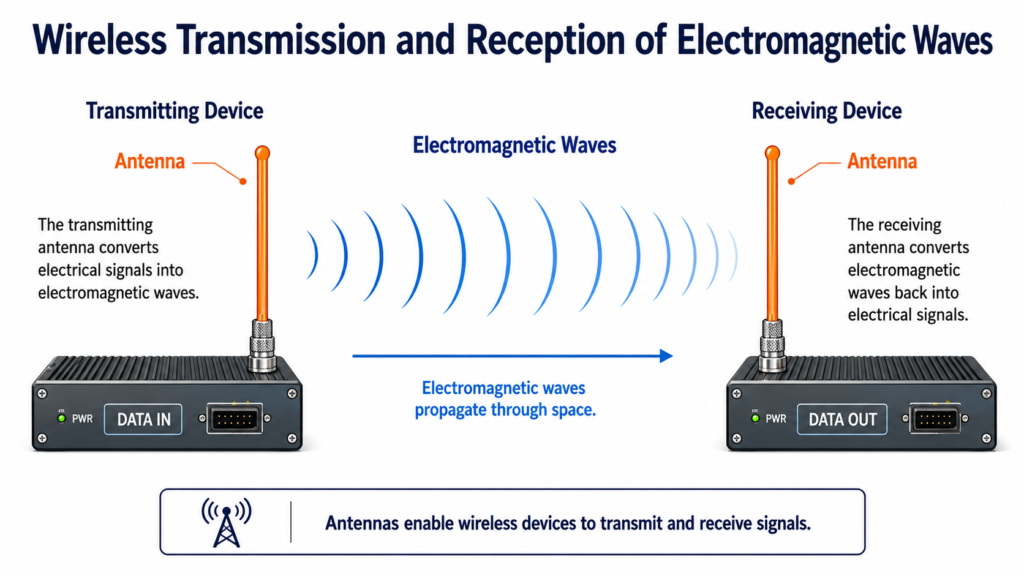
An antenna is a key component that allows a wireless device to transmit and receive radio frequency signals. In simple terms, an antenna converts electrical signals into electromagnetic waves, and it can also receive electromagnetic waves and convert them back into electrical signals.
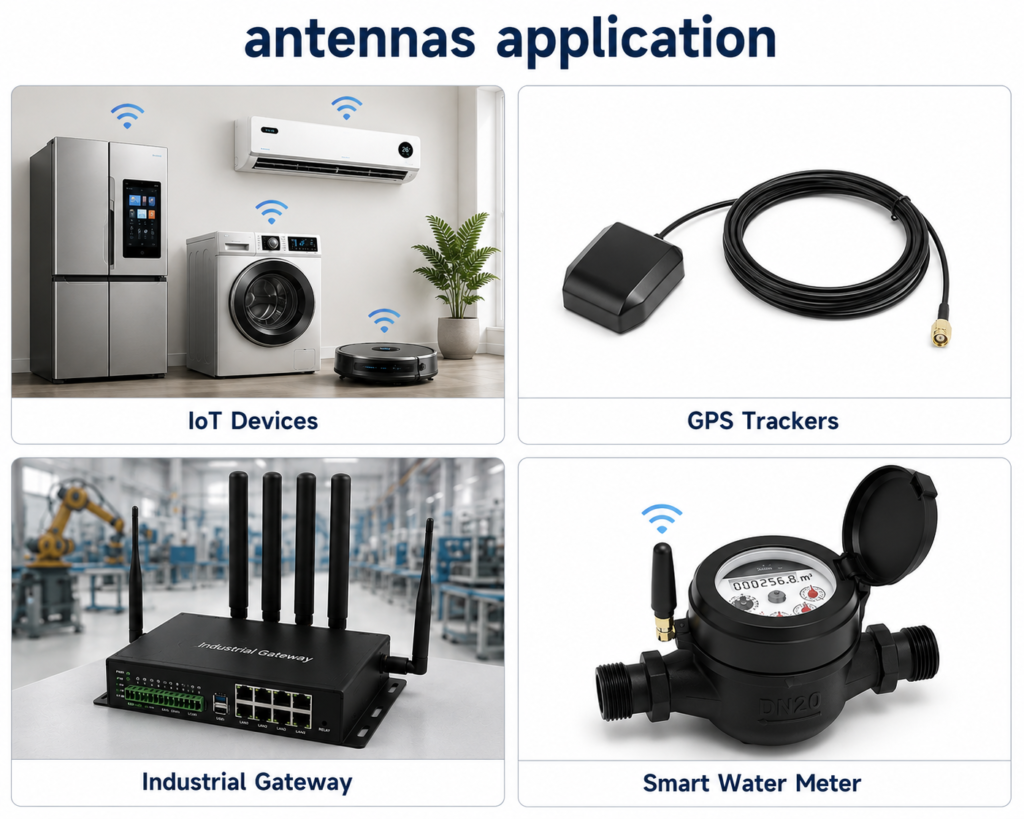
Without an antenna, most wireless devices would not be able to communicate effectively. Whether it is an IoT sensor, GPS tracker, industrial gateway, wireless router, smart meter, or remote monitoring device, the antenna plays an important role in signal coverage, connection stability, and overall wireless performance.
How Does an Antenna Work?
An antenna works by interacting with radio frequency energy. When a transmitter sends an electrical signal to the antenna, the antenna radiates that energy into the air as electromagnetic waves. When receiving, the antenna captures electromagnetic waves from the surrounding environment and sends the signal to the receiver circuit.
The performance of an RF antenna depends on many factors, including frequency band, antenna size, antenna type, installation position, nearby materials, ground plane, and the structure of the wireless device.
For example, a 433MHz antenna is usually larger than a 2.4GHz antenna because lower frequencies generally require longer antenna structures. This is why antenna selection should always match the frequency band and product design.
Common Types of Antennas
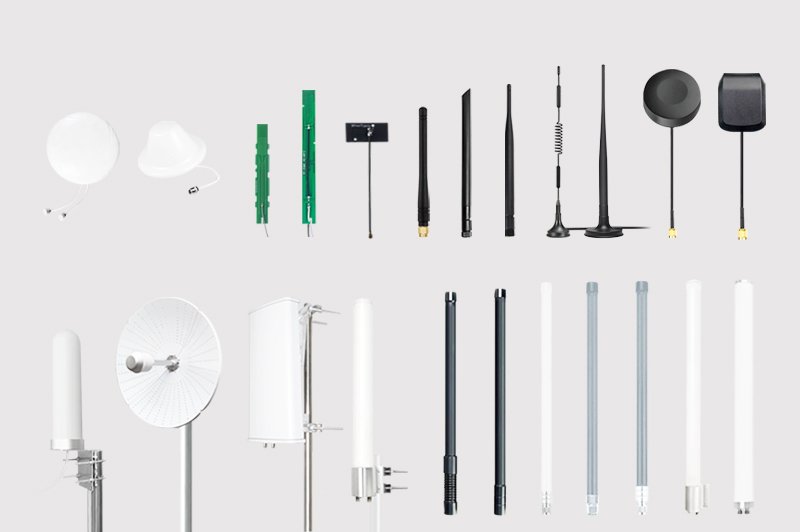
Different wireless products require different antenna types. Some common antenna types include:
- Embedded antennas, such as PCB antennas, FPC antennas, spring antennas, and internal directional antennas
- External antennas, such as rubber duck antennas, magnetic mount antennas, fiberglass antennas, and ceiling mount antennas
- Directional antennas, such as sector antennas and parabolic antennas
- GNSS/GPS antennas, used for positioning and navigation applications
Each antenna type has its own advantages. A PCB antenna may be suitable for compact devices with limited space. A rubber duck antenna is often used when external installation and flexible orientation are needed. A fiberglass antenna may be a better option for outdoor or industrial environments.
Why Antenna Design Matters
Antenna design is not only about choosing a part from a catalog. The same antenna may perform differently in different products. The plastic housing, metal parts, battery, PCB layout, cable length, installation angle, and surrounding environment can all affect antenna performance.
For compact wireless devices, embedded antenna design can be especially challenging. If the antenna is too close to metal components or does not have enough clearance, signal performance may become weak or unstable.
This is why antenna design should be considered early in the product development process, not after the device structure has already been finalized.
How to Choose the Right Antenna
When choosing an antenna, you should consider several key factors:
- Frequency band
- Device size and structure
- Required signal coverage
- Installation method
- Indoor or outdoor environment
- Gain, VSWR, impedance, and efficiency
- Certification and mass production requirements
A standard antenna may work well for many applications. However, if your device has special requirements for size, frequency, gain, installation space, or environmental durability, a custom antenna solution may be needed.
When Do You Need a Custom Antenna Solution?
You may need a custom antenna solution when:
- The available space inside the device is very limited
- A standard antenna cannot meet the required frequency band
- The antenna performance changes after installation
- The device housing, PCB, or metal parts affect signal quality
- The product requires special waterproof, outdoor, or industrial design
- You need stable performance before mass production
In these cases, working with an RF engineering team can help improve antenna performance through antenna selection, simulation, tuning, testing, and production optimization.
FAQ
Is an antenna only used for sending signals?
No. An antenna can transmit signals, receive signals, or do both, depending on the wireless system.
Does every wireless device need an antenna?
Yes. Any device that uses wireless communication needs some form of antenna, whether it is internal or external.
Is a bigger antenna always better?
Not always. The right antenna size depends on the frequency band, device structure, and application requirements.
Can I use a standard antenna for my product?
In many cases, yes. But if a standard antenna cannot meet your size, frequency, gain, or installation requirements, custom antenna design may be a better choice.
Conclusion
An antenna is one of the most important parts of any wireless device. It directly affects communication distance, signal stability, and product reliability. Choosing the right antenna requires more than matching a frequency. It also requires understanding the device structure, installation environment, and performance goals.
If your device has special requirements for frequency, gain, size, installation space, or environmental durability, our RF engineering team can help develop a custom antenna solution from design to production.