
PCB antenna vs FPC antenna is an important topic in embedded antenna design. Both are internal antenna solutions commonly used in compact wireless devices, IoT products, Bluetooth devices, WiFi modules, trackers, smart meters, and handheld electronics.
A PCB antenna is formed directly on the printed circuit board. An FPC antenna is made on a flexible printed circuit material and is usually attached inside the device housing with adhesive.
Both options can work well, but the right choice depends on product structure, available space, frequency band, cost, assembly method, and performance requirements.
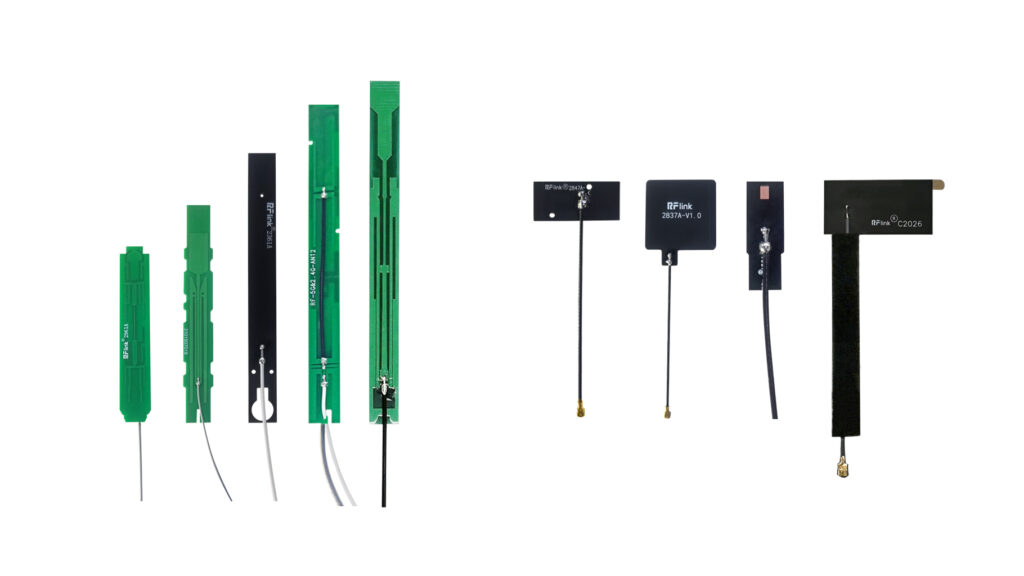
What Is a PCB Antenna?
A PCB antenna is a printed antenna structure designed directly on the main circuit board or a separate PCB. It uses copper traces on the board to radiate and receive RF signals.
PCB antennas are widely used because they can be integrated into the product without adding a separate antenna part. This can reduce material cost and simplify assembly in high-volume products.
However, PCB antenna performance depends strongly on PCB layout, ground plane, clearance area, and surrounding components. If the board size is too small or the layout is not suitable, antenna performance may be limited.
Advantages of PCB Antennas
PCB antennas are often selected when the product has enough PCB space and needs a cost-effective embedded antenna solution.
Common advantages include:
- No separate flexible antenna part required
- Good for high-volume production
- Stable mechanical structure
- Lower material cost in many designs
- Suitable for integrated product design
- Can be customized based on PCB layout
PCB antennas are common in WiFi devices, Bluetooth products, IoT modules, remote controls, smart meters, and compact wireless electronics.
What Is an FPC Antenna?
An FPC antenna is made on a flexible printed circuit material. It is usually thin, lightweight, and can be attached to the inside of a plastic housing.
Compared with a PCB antenna, an FPC antenna offers more placement flexibility. It can be positioned away from noisy components, batteries, displays, or metal parts. This makes it useful when the main PCB does not have enough space for an antenna.
FPC antennas are commonly used in compact wireless devices, trackers, wearable devices, smart home products, handheld terminals, and IoT sensors.
Advantages of FPC Antennas
FPC antennas are often chosen when the product needs a flexible installation position.
Common advantages include:
- Flexible placement inside the housing
- Thin and lightweight structure
- Suitable for compact devices
- Can be positioned away from interference sources
- Easier to optimize in some mechanical structures
- Good option when PCB space is limited
However, FPC antenna performance can be affected by placement, cable routing, adhesive position, housing material, and nearby components.
PCB Antenna vs FPC Antenna: Key Differences
The main difference between PCB antenna and FPC antenna is where and how the antenna is integrated.
A PCB antenna is part of the circuit board. It is usually more cost-effective when the PCB has enough space and the layout can support good RF performance.
An FPC antenna is a separate flexible antenna. It provides more freedom in placement and can be useful when the product structure is compact or the PCB layout is not ideal for antenna radiation.
How to Choose Between PCB and FPC Antennas
When choosing between a PCB antenna and an FPC antenna, consider:
- Available PCB space
- Device housing structure
- Frequency band
- Required antenna performance
- Ground plane size
- Battery, display, and metal component location
- Assembly process
- Cost target
- Certification and mass production requirements
If the PCB has enough antenna clearance and a suitable ground plane, a PCB antenna may be a good choice. If the board is crowded or the antenna needs to be placed in a better location inside the housing, an FPC antenna may be more suitable.
Why Antenna Tuning Is Important
Both PCB antennas and FPC antennas usually require tuning after integration. The final product structure can change antenna impedance, VSWR, efficiency, and radiation pattern.
Engineers may adjust the antenna structure, matching circuit, ground clearance, or placement to improve performance. This is especially important before certification and mass production.
FAQ
What is the difference between a PCB antenna and an FPC antenna?
A PCB antenna is printed directly on a circuit board, while an FPC antenna is made on flexible material and attached inside the device housing.
Is a PCB antenna cheaper than an FPC antenna?
In many high-volume designs, PCB antennas can be more cost-effective because they do not require a separate antenna part.
Is an FPC antenna better for compact devices?
Often yes. FPC antennas offer flexible placement, which can help when PCB space is limited.
Do PCB and FPC antennas need tuning?
Yes. Both usually need tuning after integration into the final device.
Conclusion
PCB antennas and FPC antennas are both widely used embedded antenna solutions. A PCB antenna can be cost-effective and highly integrated, while an FPC antenna offers more placement flexibility for compact products.
If your wireless device needs a custom PCB antenna or FPC antenna for a specific frequency band, size, housing structure, or performance target, our RF engineering team can help develop a custom antenna solution from design to production.