
A directional AP antenna is an antenna designed for wireless access point devices that need controlled signal coverage in a specific direction or area. Unlike a general omnidirectional antenna that spreads signal around the device, a directional AP antenna focuses more RF energy toward a target coverage zone.
In commercial wireless access points, especially wall-mounted, ceiling-mounted, or directional AP products, the antenna is often installed inside the device housing. This type of internal AP antenna is not simply a standard antenna placed into a plastic case. It usually needs to be designed together with the AP housing, PCB layout, RF ports, frequency bands, and coverage requirements.
For this reason, many commercial directional AP antennas require custom antenna design.
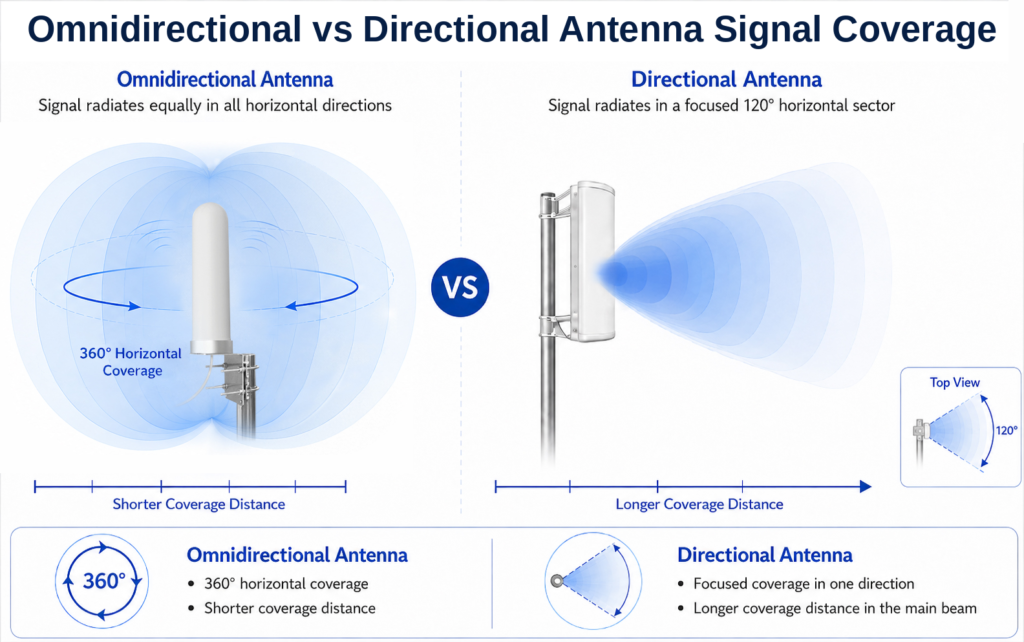
What Is a Directional AP Antenna Used For?
A directional AP antenna is mainly used to shape wireless signal coverage. In many commercial environments, wireless coverage does not need to spread equally in all directions. Instead, the signal may need to cover a hallway, office area, classroom, warehouse aisle, hotel corridor, retail space, or a specific indoor zone.
By using a directional antenna design, the AP can focus signal energy toward the required area and reduce unnecessary coverage in other directions.
This can help improve:
- Targeted wireless coverage
- Signal strength in the required direction
- Network planning flexibility
- Interference control
- User experience in specific coverage zones
Directional AP antennas are often used in enterprise WiFi systems, commercial buildings, industrial facilities, hotels, schools, hospitals, transportation hubs, and other managed wireless network environments.
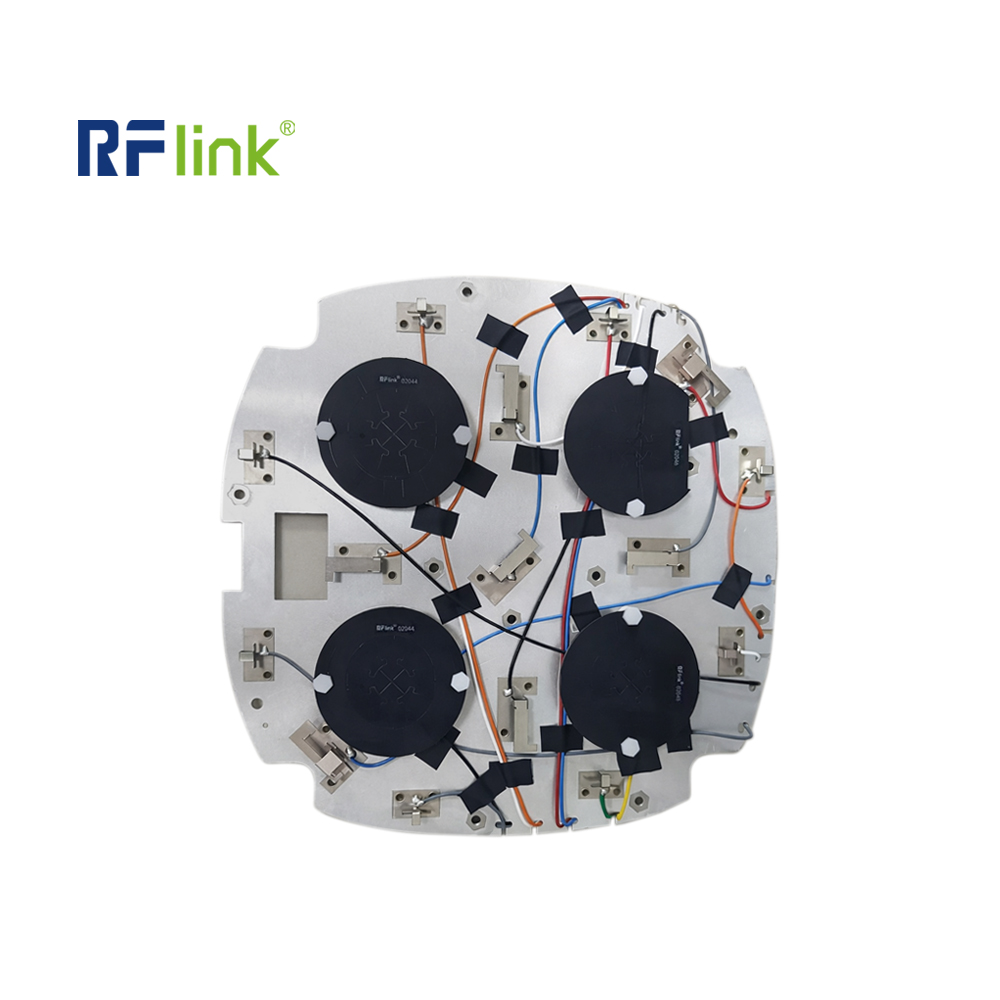
Internal Directional Antennas in Commercial AP Devices
Many commercial AP products use internal antennas instead of external antennas. The antenna is hidden inside the AP housing, which helps keep the product appearance clean, compact, and suitable for indoor installation.
However, internal directional AP antenna design is much more complex than simply choosing an antenna from a catalog. Once the antenna is placed inside the AP, its performance can be affected by many factors, including:
- AP housing shape and material
- Internal PCB layout
- Metal shielding parts
- RF module position
- Cable routing
- Antenna clearance area
- Mounting direction
- Number of RF output ports
- Required frequency bands
- Final installation environment
This is why internal AP antennas are usually developed as part of the whole device design, not as isolated components.
Why Directional AP Antennas Need Custom Design
Directional AP antennas often need custom design because every AP product is different. Even if two AP devices support similar wireless standards, their mechanical structure, PCB layout, antenna position, and RF port configuration may be completely different.
There are several key reasons.
1.Different AP Housing Designs
The AP housing has a direct influence on antenna performance. The size, shape, thickness, material, and internal space of the enclosure can affect antenna radiation, gain, efficiency, and radiation pattern.
For example, a wall-mounted AP and a ceiling-mounted AP may require different antenna radiation patterns. A compact AP with limited internal space may need a different antenna structure from a larger commercial AP.
If the antenna is not designed according to the housing, the final wireless coverage may not match the expected result.
2.Different Frequency Band Requirements
Commercial AP products may support different frequency bands, such as 2.4GHz, 5GHz, and 6GHz WiFi bands. Some devices may support dual-band WiFi, while others may support tri-band WiFi or newer WiFi standards.
Each frequency band has different wavelength characteristics and antenna design requirements. An antenna that works well for one band may not perform well across multiple bands without proper design and tuning.
For directional AP products, the antenna must not only cover the required frequency bands but also maintain the desired radiation pattern across those bands.
3.Different RF Output Port Quantities
Modern AP devices often use multiple RF ports to support MIMO or multi-antenna systems. The number of output ports can vary from one AP design to another.
For example, one AP may require two antenna ports, while another may require four, six, or more RF paths. Each antenna element must be arranged carefully to reduce interference, maintain isolation, and support stable wireless performance.
This makes multi-port AP antenna design more complex than single-antenna design.
4.Different Internal PCB Layouts
The internal circuit board of an AP can strongly affect antenna performance. PCB size, ground plane, RF trace layout, module location, shielding parts, and nearby components can all influence impedance matching and radiation behavior.
Even a well-designed antenna may need tuning after being installed near the final AP circuit board. This is why antenna matching and antenna tuning are important steps in directional AP antenna development.
5.Radiation Pattern Requirements
A directional AP antenna is not only judged by frequency and VSWR. Its radiation pattern is also critical.
The antenna must send signal energy toward the intended coverage area. If the pattern is too wide, too narrow, tilted in the wrong direction, or distorted by the AP structure, the real coverage may be poor.
Custom antenna design allows engineers to optimize the antenna pattern according to the product installation method and coverage target.
Key Design Factors for Directional AP Antennas
When developing a directional AP antenna, engineers usually need to consider:
- Frequency bands, such as 2.4GHz, 5GHz, or 6GHz
- AP housing size and material
- Internal antenna placement
- PCB layout and ground plane
- RF output port quantity
- Antenna isolation in multi-port designs
- Gain and radiation pattern
- VSWR and impedance matching
- Installation method, such as wall-mounted or ceiling-mounted
- Production consistency and reliability
A good directional AP antenna should not only work in a test environment. It should maintain stable performance after being integrated into the final AP product.
Standard Antenna or Custom Directional AP Antenna?
A standard antenna may be suitable for some simple wireless devices. However, for commercial directional AP products, standard antennas often cannot fully meet the requirements of housing structure, frequency bands, port quantity, radiation pattern, and internal PCB matching.
A custom directional AP antenna is usually a better choice when:
- The AP housing has a special structure
- The product needs directional wireless coverage
- The device supports multiple frequency bands
- The AP has multiple RF output ports
- The internal PCB layout affects antenna performance
- The antenna must be hidden inside the device
- The product needs stable performance before mass production
By developing the antenna together with the AP structure and RF system, engineers can improve wireless coverage, reduce integration problems, and support more reliable production.
FAQ
What is a directional AP antenna?
A directional AP antenna is an antenna used in wireless access point devices to focus signal coverage toward a specific direction or area.
Is a directional AP antenna internal or external?
It can be either, but many commercial AP devices use internal directional antennas hidden inside the housing.
Why do commercial AP antennas need custom design?
Because AP housing, frequency bands, RF output ports, PCB layout, and radiation pattern requirements are different for each product.
What frequency bands do AP antennas usually support?
Many AP antennas support WiFi frequency bands such as 2.4GHz, 5GHz, and sometimes 6GHz, depending on the product design.
Why is antenna matching important in AP antenna design?
Antenna matching helps reduce signal reflection and improve power transfer between the RF circuit and the antenna, which supports better wireless performance.
Conclusion
A directional AP antenna is a key part of commercial wireless access point design. It helps shape wireless coverage, improve signal performance in target areas, and support better network planning.
Because AP housing, frequency bands, RF output port quantities, internal PCB layouts, and radiation pattern requirements are different from one product to another, commercial directional AP antennas often require custom antenna design.
If your AP device needs an internal directional antenna with specific frequency bands, port configuration, radiation pattern, size, or installation structure, our RF engineering team can help develop a custom antenna solution from design to production.