
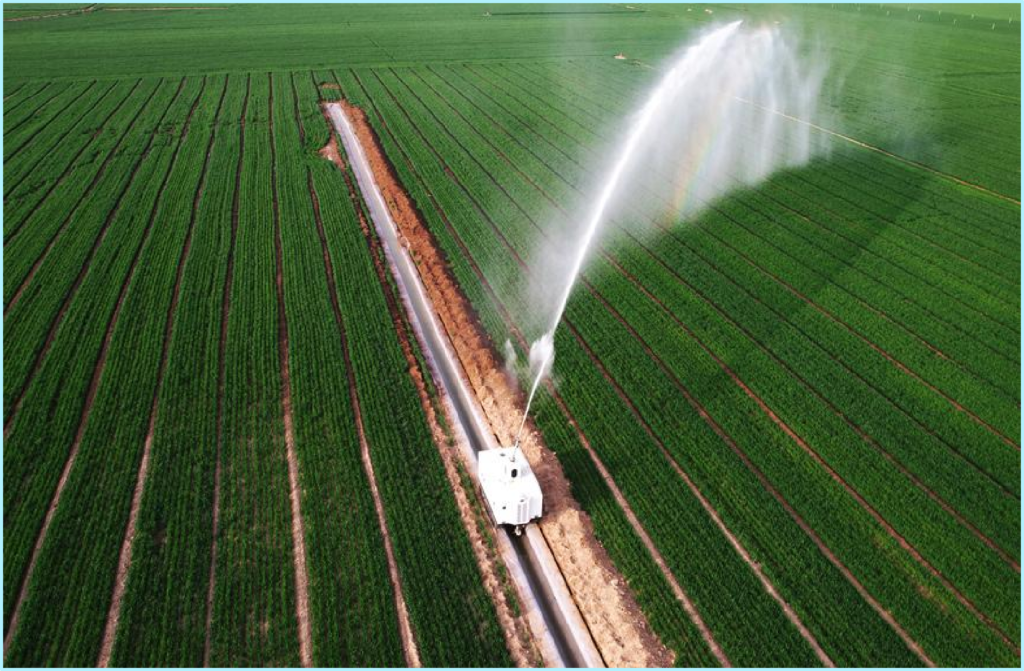
Smart irrigation systems are changing how farms manage water. Instead of relying only on manual inspection, modern irrigation networks can monitor soil moisture, water meter pulses, valve status, pump operation, pressure conditions, and battery level in real time. These small data packets can be sent through a LoRaWAN network to help farmers decide when to irrigate, where to irrigate, and how much water to use.
However, smart irrigation is not only about uploading sensor data. It also involves downlink control. The system may need to open a valve, start a pump, stop irrigation, synchronize a water meter, or trigger an alarm. If the wireless link is unstable, a valve command may fail, a pump may not respond in time, or a field sensor may disappear from the network.
This is why antenna selection is critical in smart irrigation projects. A LoRa module may work well in a laboratory, but real farmland is very different. Irrigation control boxes may be installed in metal cabinets, semi-buried boxes, pump rooms, water channels, orchards, or remote field locations. Motors, inverters, high-voltage lines, metal pipes, wet soil, and low installation height can all reduce wireless performance.
A properly selected LoRa antenna can help improve coverage, reduce packet loss, and make remote irrigation control more reliable.
What Is a LoRa Antenna for Smart Irrigation?
A LoRa antenna for smart irrigation is an antenna used with LoRa or LoRaWAN modules in irrigation sensors, valve controllers, pump station controllers, gateways, and field monitoring devices.
In a typical LoRaWAN irrigation network, field devices collect data and send it to a gateway. The gateway then sends the data to a cloud platform through Ethernet, WiFi, 4G, 5G, or another backhaul connection. In some systems, the platform can also send control commands back to the valve controller or pump controller.
Common smart irrigation devices that may need LoRa antennas include:
- Soil moisture sensors
- Valve controllers
- Pump station controllers
- Water meter pulse devices
- Pressure monitoring devices
- Weather stations
- Field gateways
- Solar-powered remote terminals
- Central irrigation control cabinets
The antenna may be a rubber duck antenna, waterproof external antenna, magnetic mount antenna, through-wall antenna, or fiberglass antenna depending on the installation environment.
Why LoRaWAN Is Suitable for Smart Irrigation
LoRaWAN is suitable for smart irrigation because most irrigation data is small in size. Soil moisture, valve status, water meter pulses, battery level, and pump status do not require video or high-speed data transmission. They require long-distance, low-power, and stable communication.
Many irrigation devices are powered by batteries or solar panels, so low power consumption is important. Farms and water channels may cover long distances, so wide-area communication is also important. LoRaWAN fits this type of application well when the network is designed with the right gateway location, antenna type, cable length, and installation method.
But LoRaWAN coverage is never determined by the module alone. Antenna height, antenna gain, connector quality, cable loss, enclosure material, metal shielding, and local interference all affect final performance.
1. Confirm the Frequency Band
The first step in choosing a LoRa antenna for smart irrigation is confirming the correct frequency band.
Common LoRa frequency bands include:
- 433MHz
- 470MHz
- 868MHz
- 915MHz
For many international LoRaWAN projects, 868MHz and 915MHz are common bands. The antenna must match the module and the regional frequency plan. If the antenna frequency is wrong, the system may experience short communication distance, high VSWR, weak RSSI, poor SNR, or unstable connection.
For example, an 868MHz LoRa device should not use a 915MHz-only antenna unless the antenna bandwidth can properly cover the required frequency range. For irrigation equipment manufacturers selling to different regions, it may be necessary to prepare different antenna versions or design a wider-band solution.
2. Check the Installation Environment
Smart irrigation equipment is often installed in difficult RF environments. The antenna should be selected according to where the device is installed, not only according to the module specification.
A plastic outdoor box may support a small external rubber duck antenna or waterproof antenna. A metal control cabinet usually needs an external antenna because the metal enclosure blocks the signal. A semi-buried valve box may need the antenna to be extended above ground level. A pump station gateway may need a fiberglass antenna installed away from motors and high-voltage equipment.
Before choosing an antenna, engineers should check:
- Is the device installed in a metal or plastic enclosure?
- Is the box above ground, half-buried, or underground?
- Is the antenna close to wet soil or water pipes?
- Is there a motor, inverter, transformer, or high-voltage line nearby?
- Is the device fixed or mobile?
- How far is the device from the gateway?
- Does the installation need waterproof or UV-resistant materials?
A good antenna choice starts with the real site conditions.
3. Use an External Antenna for Metal Control Boxes
One common mistake in smart irrigation projects is placing the LoRa antenna inside a metal control box. This can seriously weaken the signal. Even if the LoRa module and antenna are technically correct, the metal enclosure may block the signal before it can leave the box.
For metal valve control cabinets, pump control cabinets, or industrial irrigation controllers, an external antenna is usually required. Common options include:
- Waterproof rubber duck antenna
- Magnetic mount antenna
- N-type through-wall antenna
- External fiberglass LoRa antenna
- Cable-mounted antenna placed above the box
If the device is mounted on a metal cabinet, a magnetic mount antenna can sometimes use the metal surface as a ground plane. If the system is fixed in a pump station or central control point, a fiberglass LoRa antenna can be mounted higher to improve coverage.
The key rule is simple: do not hide the antenna inside a metal box if stable long-range communication is required.
4. Choose the Right Antenna Gain
Antenna gain is important, but higher gain is not always better.
For pump station gateways, centralized irrigation controllers, or outdoor LoRaWAN gateways, a 3–6dBi fiberglass LoRa antenna is often a practical choice for balanced coverage. It can help receive signals from distributed valve controllers and field sensors while maintaining a useful vertical coverage angle.
For large, flat irrigation areas or long water channels, a higher-gain fiberglass antenna may help extend coverage. However, high-gain omnidirectional antennas usually have a narrower vertical beam. This may create blind spots near the gateway or reduce performance when nodes are located at different heights.
For long and narrow water channels, irrigation pipelines, or valley-like farmland, a directional antenna or sector antenna may sometimes be more effective than an omnidirectional antenna. The right gain should be selected according to terrain, node distribution, gateway height, and coverage direction.
5. Pay Attention to Cable Length and Connector Type
Outdoor LoRa antennas are often connected to the gateway or controller through a coaxial cable. The cable gives more installation flexibility, but it also introduces signal loss.
When choosing the antenna cable and connector, consider:
- Cable length
- Cable loss at the operating frequency
- Connector type
- Waterproof sealing
- Mechanical strength
- Cable routing path
- Drip loop design for outdoor installation
Common connector options include SMA, RP-SMA, N-Type, and custom RF connectors. For outdoor pump station or irrigation gateway installation, waterproof connector design is especially important. Water entering the connector can increase VSWR, reduce signal strength, and cause long-term reliability problems.
The antenna should be installed high enough to avoid obstruction, but the cable should not be unnecessarily long. A short and well-routed cable is usually better than a long cable with high loss.
6. Consider Waterproof and Outdoor Durability
Smart irrigation equipment is exposed to sunlight, rain, humidity, mud, fertilizer, and temperature changes. The antenna must be suitable for long-term outdoor use.
For outdoor field devices, a waterproof rubber antenna may be enough. For gateways, pump stations, and wide-area coverage points, a fiberglass antenna is often more suitable because it is designed for fixed outdoor installation.
Important outdoor requirements include:
- Waterproof structure
- UV-resistant housing
- Stable connector sealing
- Corrosion resistance
- Strong mounting hardware
- Wind resistance
- Long-term mechanical reliability
In agricultural projects, maintenance can be costly because devices are distributed across a large area. A durable antenna helps reduce site visits and unexpected communication failures.
7. Standard LoRa Antenna or Custom LoRa Antenna?
A standard LoRa antenna can work well in many irrigation applications. However, custom antenna design may be needed when the product has special mechanical, electrical, or environmental requirements.
A custom LoRa antenna may be useful when:
- The controller has a special enclosure shape
- The antenna must use a specific connector
- The cable length must match the cabinet layout
- The device is installed in a metal or semi-buried box
- The project needs 868MHz and 915MHz versions
- Standard antennas do not provide enough coverage
- The system needs waterproof or anti-UV design
- Stable performance is required before mass deployment
For smart irrigation equipment manufacturers, antenna design should be considered early in the product development stage. Waiting until field testing to solve antenna problems can increase cost and delay project delivery.
FAQ
What antenna is best for a LoRaWAN smart irrigation system?
It depends on the device and installation environment. Field nodes may use waterproof rubber antennas or cable-mounted antennas. Pump station gateways and central LoRaWAN gateways often use fiberglass LoRa antennas for wider outdoor coverage.
Can a LoRa antenna be installed inside a metal control box?
It is not recommended for long-range communication. Metal boxes can seriously block LoRa signals. For metal valve cabinets or pump control cabinets, an external antenna, through-wall antenna, or fiberglass antenna is usually a better choice.
Is a higher-gain LoRa antenna always better?
No. Higher gain may help in large, flat areas, but it can also narrow the vertical beam and create blind spots near the gateway. For mixed-distance nodes or uneven terrain, a moderate-gain antenna may perform better.
What frequency is used for LoRa smart irrigation?
Common LoRa frequencies include 433MHz, 470MHz, 868MHz, and 915MHz. The correct frequency depends on the LoRa module, regional regulations, and network plan.
Why use a fiberglass antenna for pump station gateways?
A fiberglass antenna is suitable for fixed outdoor installation. It can be mounted higher than the control cabinet or pump room, helping improve gateway coverage and long-term outdoor reliability.
Conclusion
Choosing a LoRa antenna for smart irrigation requires more than matching a frequency band. Engineers should evaluate the device enclosure, installation height, metal shielding, cable loss, connector type, waterproof design, antenna gain, and real field environment.
For valve controllers, pump stations, water channels, and large farms, the right antenna can make the difference between an unstable wireless link and a reliable irrigation control network.
If a standard antenna cannot meet your requirements for frequency, gain, connector, cable length, mounting method, or outdoor durability, RFLINK can support custom LoRa antenna solutions from design and testing to production delivery.