
A rubber duck antenna is one of the most common external antennas used in wireless communication devices. It is compact, flexible, easy to install, and widely used in routers, gateways, IoT devices, wireless modules, handheld terminals, smart meters, and industrial equipment.
However, choosing a rubber duck antenna is not only about selecting a product that looks suitable. The antenna frequency band, gain, connector type, installation angle, device structure, and real working environment can all affect wireless performance.
This guide explains how to choose the right rubber duck antenna for your wireless device.
What Is a Rubber Duck Antenna?
A rubber duck antenna is a compact external antenna usually covered with a flexible rubber or plastic housing. It is commonly designed as an omnidirectional antenna, which means it can provide signal coverage around the antenna in a wide horizontal area.
Rubber duck antennas are often used when a device needs an external antenna but does not require a large outdoor antenna. They are popular because they are simple to install, mechanically durable, and available in many frequency bands and connector types.
Common applications include:
- WiFi routers and gateways
- IoT devices
- LoRa terminals
- Smart meters
- Wireless sensors
- Handheld devices
- Industrial controllers
- Remote monitoring equipment
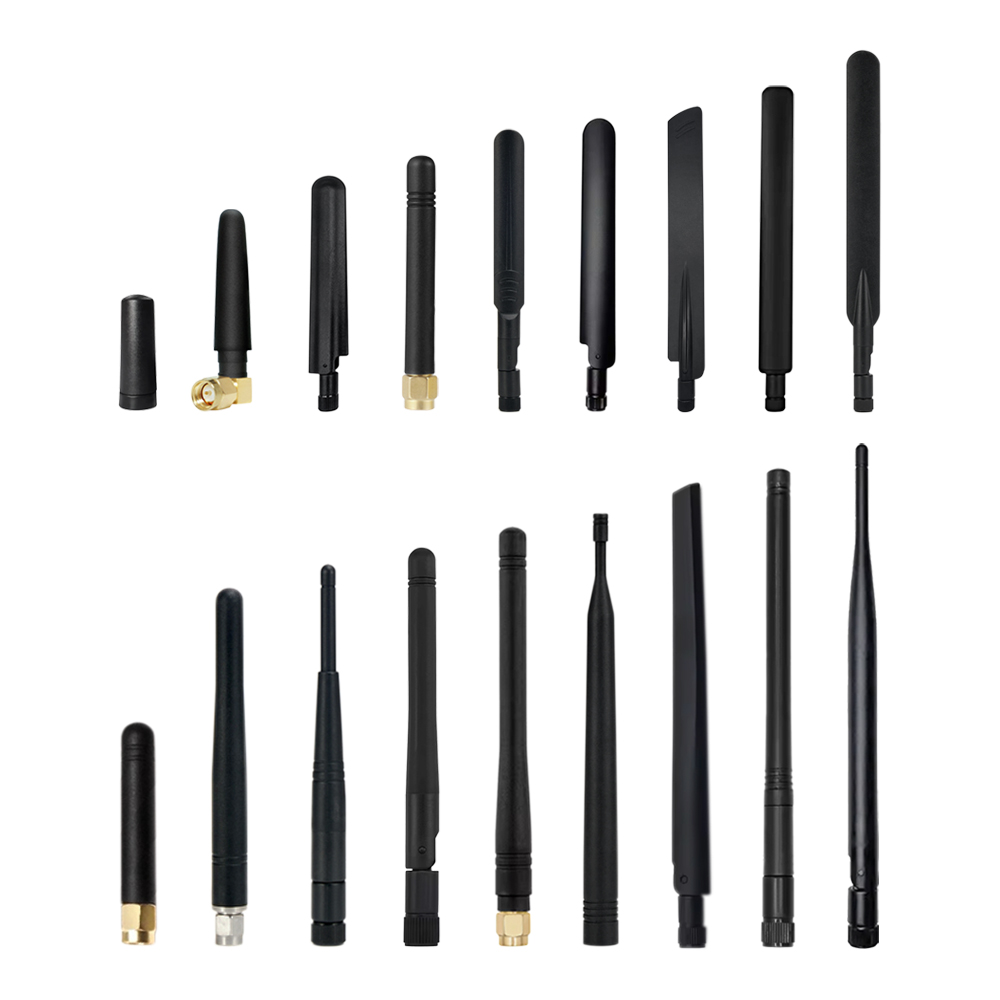
1. Choose the Correct Frequency Band
The first step in choosing a rubber duck antenna is confirming the frequency band. The antenna must match the wireless module and communication standard used by the device.
Common frequency options include:
- 433MHz for remote control, smart meters, and industrial wireless devices
- 868MHz / 915MHz for LoRa, IoT, and remote monitoring
- 2.4GHz for WiFi, Bluetooth, Zigbee, and IoT devices
- 5GHz / 6GHz for WiFi applications
- LTE / 4G / 5G bands for cellular communication devices
If the antenna does not match the required frequency band, the device may experience weak signal, poor range, high VSWR, or unstable communication.
For products that need to support multiple wireless standards, a multiband rubber duck antenna may be required.
2. Select the Right Antenna Gain
Antenna gain is another important factor. It describes how the antenna distributes RF energy in space.
Many rubber duck antennas are omnidirectional, but their gain values can still vary. A lower gain antenna may provide wider vertical coverage, while a higher gain antenna may focus more energy toward the horizontal direction.
Higher gain is not always better. The right antenna gain depends on the application, installation environment, device orientation, and required coverage area.
For example, a handheld device may need stable coverage in different directions. A fixed gateway may benefit from a higher gain antenna if the target devices are spread across a horizontal area.
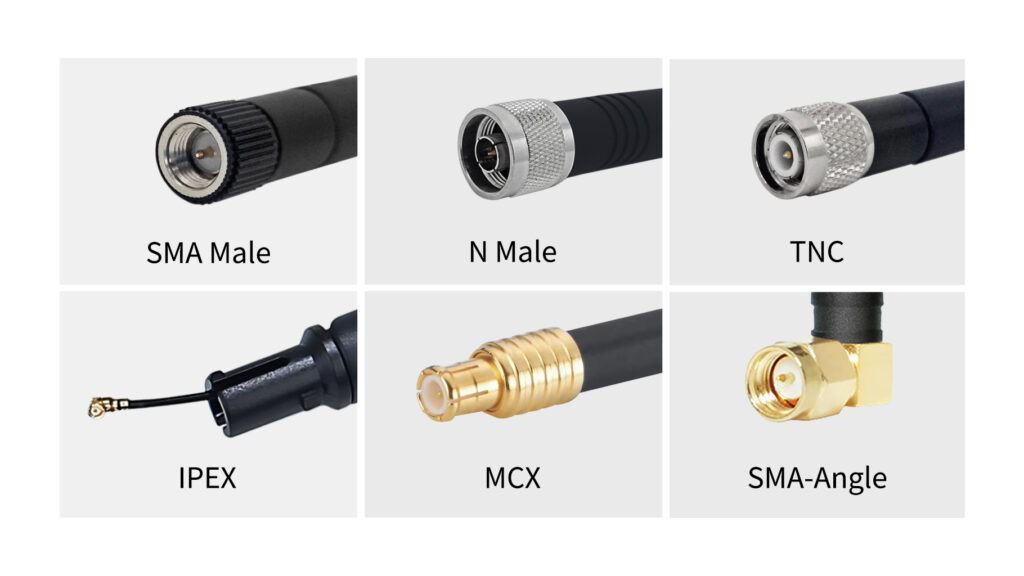
3. Check the Connector Type
The connector must match the RF interface of the device. Common rubber duck antenna connectors include:
- SMA male
- SMA female
- RP-SMA male
- RP-SMA female
- N-type connector
- TNC connector
- BNC connector
For many WiFi and IoT devices, SMA and RP-SMA connectors are common. However, connector gender and pin configuration must be checked carefully. A connector that looks similar may not actually fit or work correctly.
If the device uses an internal RF connector, such as IPEX or U.FL, an antenna cable or adapter may be needed.
4. Consider Straight, Right-Angle, or Foldable Design
Rubber duck antennas can have different mechanical forms. The most common options are straight, right-angle, and foldable designs.
A straight antenna is simple and stable when the device has enough vertical space. A right-angle antenna is useful when the device is installed close to a wall, panel, or enclosure. A foldable antenna allows the user to adjust the antenna direction after installation.
The mechanical design should match the final installation environment. A good RF antenna should not only meet electrical requirements but also fit the product structure.
5. Evaluate the Installation Environment
The surrounding environment can greatly affect antenna performance. Even a good rubber duck antenna may perform poorly if it is installed too close to metal, blocked by the device housing, or placed in a poor orientation.
When choosing a rubber duck antenna, consider:
- Is the device installed indoors or outdoors?
- Is the antenna close to metal surfaces?
- Will the antenna be mounted vertically or horizontally?
- Is the device fixed or moving?
- Are there walls, machines, batteries, or cables nearby?
- Does the product require waterproof or industrial durability?
For outdoor or harsh environments, a fiberglass antenna or waterproof external antenna may be more suitable than a standard rubber duck antenna.
6. Check VSWR, Impedance, and Efficiency
Most rubber duck antennas are designed for 50 ohm RF systems. However, the final antenna performance still depends on matching, installation, and the device structure.
Important RF parameters include:
- Frequency range
- Gain
- VSWR
- Impedance
- Efficiency
- Radiation pattern
- Power handling
A low VSWR usually means better impedance matching and less signal reflection. However, VSWR alone does not guarantee good antenna performance. Gain, efficiency, and real-world testing should also be considered.
7. Standard Rubber Duck Antenna or Custom Design?
A standard rubber duck antenna can work well for many applications. However, custom antenna design may be needed when the product has special requirements for frequency, gain, connector, length, housing, installation angle, or environmental durability.
A custom rubber duck antenna may be useful when:
- The device requires a special frequency band
- The standard antenna is too long or too short
- A specific connector or cable is required
- The antenna must meet waterproof or outdoor requirements
- The product needs a custom color, housing, or mechanical structure
- Standard antennas cannot meet the required wireless range
In these cases, a custom antenna solution can help balance RF performance, mechanical design, and production requirements.
FAQ
What is a rubber duck antenna?
A rubber duck antenna is a compact external antenna with a flexible housing, commonly used for wireless communication devices.
Is a rubber duck antenna omnidirectional?
Most rubber duck antennas are omnidirectional, but the actual radiation pattern depends on frequency, gain, structure, and installation.
How do I choose the frequency of a rubber duck antenna?
The antenna frequency must match the wireless module and communication standard used by the device, such as 433MHz, 915MHz, 2.4GHz, WiFi, LoRa, or LTE.
Is higher gain better for a rubber duck antenna?
Not always. Higher gain can improve signal in some directions but may reduce coverage in others. The right gain depends on the application.
Conclusion
Choosing a rubber duck antenna requires more than matching the connector. Frequency band, gain, antenna type, connector, installation angle, device structure, and working environment should all be considered.
If a standard rubber duck antenna cannot meet your requirements for frequency, gain, connector, size, installation, or environmental durability, our RF engineering team can help develop a custom antenna solution from design to production.